Welcome to the Course
Tung Nguyen
6 min read
You use HTTP every day. Every page that loads, every API your app calls, and every image in your feed relies on an HTTP request and response. For many developers, the protocol remains a black box. You might know the common verbs and a few status codes, but the rest is often a fog of headers, handshakes, and acronyms you just push past to get the job done.
This course opens that box. By the end, you will be able to follow a request from the moment you press Enter all the way to the bytes that come back. You will learn to name every layer the request passes through and figure out what broke when something goes wrong. The goal is to build a working mental model you can actually use to debug your applications.
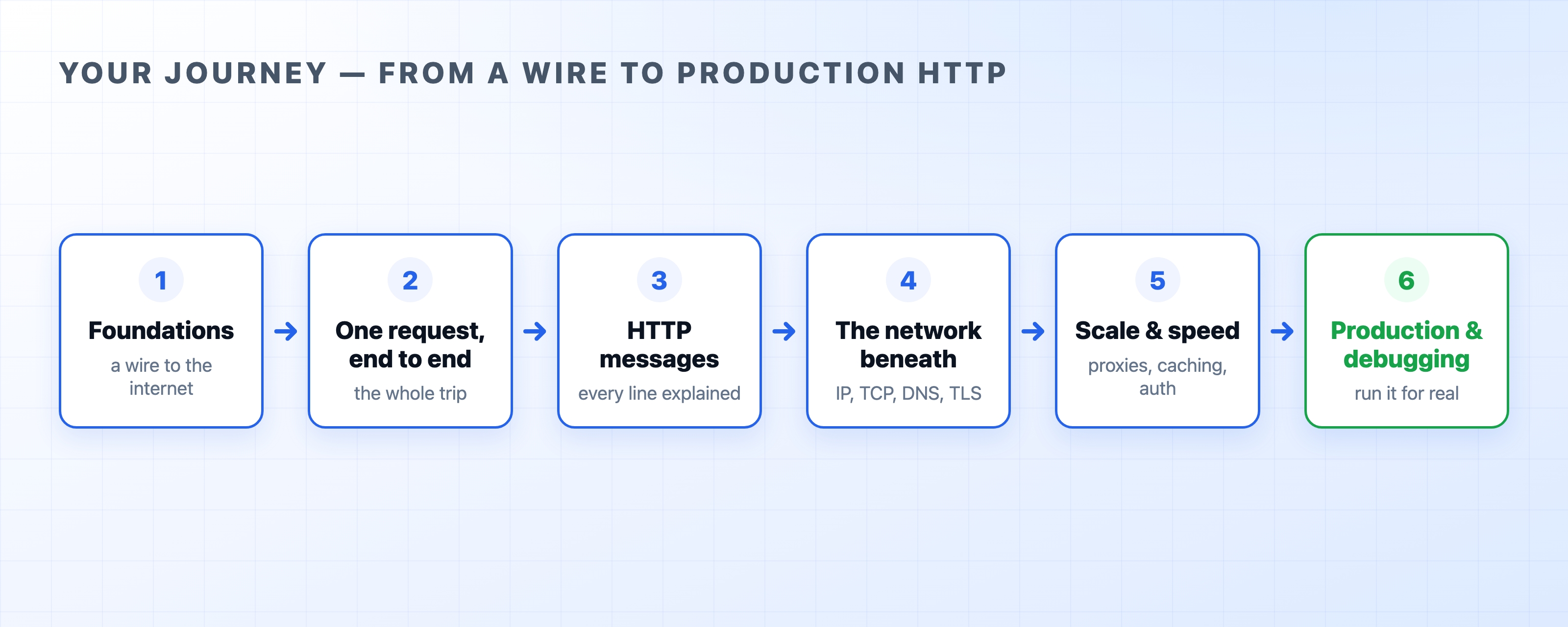
What you'll be able to do
After finishing this course, you will be able to:
- Trace a web request end to end: DNS, TCP, TLS, the HTTP request and response, and the render.
- Read and write HTTP messages by hand, and understand methods, headers, status codes, and bodies.
- Explain the layers beneath HTTP, including IP, TCP, ports, DNS, and TLS, and why each one exists.
- Design and debug real systems that involve proxies, caches, and load balancers.
Who this is for
This course is for web developers who already use HTTP and want to understand it deeply. If you have built a website or called an API and are comfortable typing commands into a terminal, you have everything you need.
There is no requirement for a computer science degree or any networking background. We start from a wire with two computers on it and build every idea from there, in order, so nothing arrives unexplained.